PART 1: THE PROMISE THAT NEVER CAME TRUE
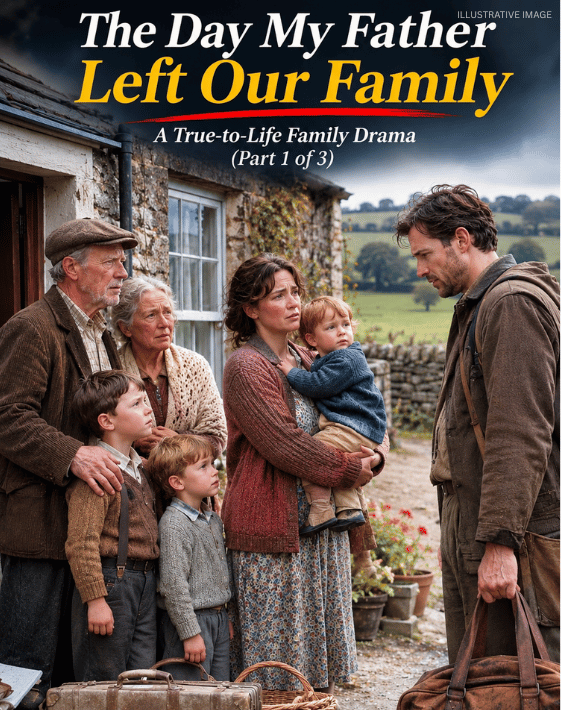
My father left home when I was six years old.
He promised he would return once he found a good job in the city.
But he never came back.
It was 1990. We lived in a small, isolated village in the English countryside, far from the busy towns and modern conveniences. Our family had seven members: my parents, my two younger brothers, my grandmother, my grandfather, and me.
My brothers were four years old and one year old.
We were poor. Our home was modest, money was always short, and my parents struggled to provide even the basic necessities.
One evening, my father gathered everyone around the kitchen table.
“I’ve been thinking about going to the city,” he said. “There are better opportunities there. If I find a good job, I can send money home and give the children a better future.”
My mother looked worried.
“How long will you be gone?”
“Only until I get settled. I promise I’ll come back.”
My grandfather listened quietly before speaking.
“If you believe this will help your family, then we should support you.”
My grandmother agreed.
Over the next few days, my mother and grandparents gathered some of their most valuable belongings. They gave them to my father so he could sell them, pay for his journey, and cover his living expenses while searching for work.
Before leaving, he knelt in front of us.
“Listen to your mother and grandparents. Study hard, boys. When I return, I want to see you doing well.”
I held his hand.
“Dad, will you bring me something when you come back?”
He smiled.
“Of course, son. I’ll bring you something special.”
I believed him.
At first, we expected him to send letters or call whenever possible. My mother waited patiently, thinking he was simply busy trying to establish himself.
But months passed without a single message.
Then one year passed.
Then another.
My mother tried contacting relatives and asking people who traveled to the city whether they had heard from him.
Nothing.
I still remember seeing her sitting alone near the kitchen window almost every evening. She would stare at the empty road outside, hoping that one day she might see my father walking toward our home.
One night, I quietly approached her.
“Mom, when is Dad coming home?”
She looked at me and forced a gentle smile.
“I don’t know, sweetheart. But you must keep studying.”
Later, we learned the truth from one of my father’s relatives.
My father had another wife.
He also had a son with her.
He had not simply failed to find his way home. He had built another family and left his first family behind.
My mother was devastated.
My grandmother cried quietly, while my grandfather became unusually silent.
That evening, I saw my mother sitting alone again.
I wanted to comfort her, but I was only six years old. I didn’t know what to say.
So I sat beside her and held her hand.
She gently touched my head.
“Don’t worry about adult problems,” she whispered. “Your brothers and you must study hard. That’s what matters now.”
From that day forward, our family learned to survive without my father.
PART 2: THE FAMILY THAT BUILT A FUTURE
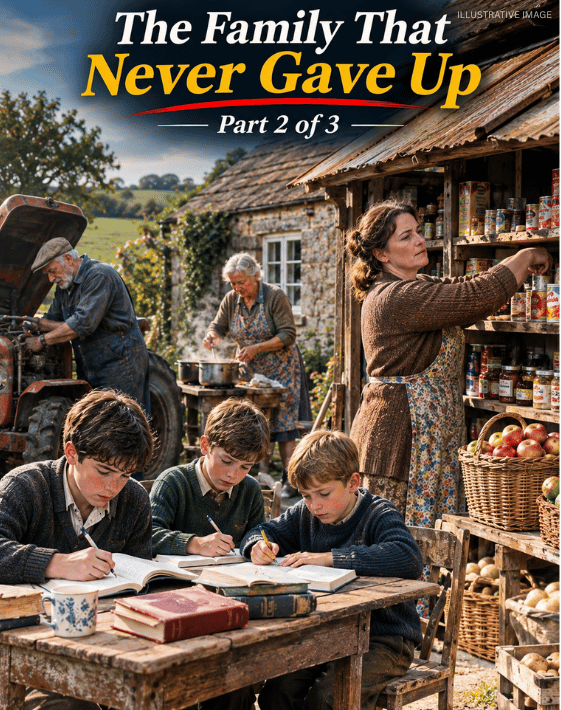
Life was difficult, but my mother and grandparents refused to give up.
They decided to start a small grocery shop in front of our home.
It was a tiny business selling basic household goods, food, and everyday necessities to people in the village.
My mother managed the shop.
My grandmother took care of the household, cooked our meals, and looked after us.
My grandfather worked wherever he could find a job. He repaired cars, tractors, and different machines for people in neighboring villages.
Sometimes he returned home exhausted, with grease on his hands and clothes.
One afternoon, I asked him, “Grandpa, why do you work so hard?”
He smiled.
“Because I want you boys to have opportunities that I never had.”
My mother also worked tirelessly.
Even when business was slow, she found ways to provide for us. She never complained about our father or made us feel guilty for the difficulties we faced.
Instead, she constantly reminded us that education was our best opportunity.
“You may not have much money today,” she told us, “but nobody can take away what you learn. Work hard and become good people.”
We followed her advice.
Years passed.
My brothers and I grew up. We finished school, continued to college, and eventually graduated from university.
All three of us found good jobs.
We built our own families, married wonderful women, and had children of our own.
Our financial situations improved considerably. We were finally able to provide comfortable lives for our wives and children.
The little boys who had once waited for their father to return had become independent adults.
But we never forgot who had helped us reach that point.
Our mother.
Our grandmother.
Our grandfather.
One day, many years after my father had disappeared, he returned to our village.
But he did not come alone.
He arrived with his second wife and their son.
By then, we were old enough to understand everything that had happened.
He greeted us as if we had simply been separated by a busy schedule.
“How are you boys?” he asked.
“We’re doing well,” I replied.
His second wife began asking about our education and careers.
“So, what have you boys been doing all these years?” she asked.
“We all finished university,” I answered. “We have good jobs and families of our own.”
She seemed surprised.
“Really? All three of you?”
I nodded.
She had apparently assumed that growing up without our father and in a financially difficult household meant we would never achieve much.
But our lives had turned out very differently.
My father listened quietly.
Not once did he ask how our mother was doing.
He didn’t ask how our grandparents had managed to raise us or whether they were still healthy.
After a short visit, he left with his second family.
When I returned home, my mother was arranging goods in the grocery shop.
“Did you see your father?” she asked.
“Yes, Mom.”
“Was he well?”
“He seemed fine.”
She nodded and continued working.
She didn’t look angry. She didn’t cry. She simply returned to what she was doing.
I realized that after so many years of disappointment, she had finally built a life in which she no longer needed to wait for him.
PART 3: THE MAN WHO WANTED TO COME HOME
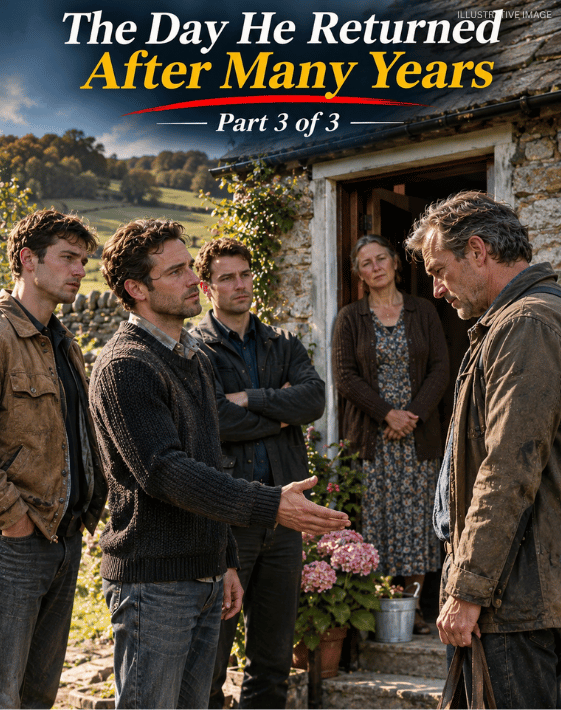
Years passed again.
My brothers and I became settled in our careers. We had our own homes, wives, and children. We were able to support our mother and make sure she lived comfortably.
Our father, meanwhile, had moved to Los Angeles, California, in the United States with his second wife and their son.
From the outside, it seemed that he had achieved the life he once wanted.
But the reality was very different.
As time went on, his relationship with his second family became increasingly difficult.
He was the main person responsible for earning money and supporting the household. He worked hard, paid the bills, and carried most of the financial responsibilities.
Yet he had very little say in family decisions.
His second wife’s family was wealthy, and he often felt that he was treated as though his only purpose was to provide money.
When he tried to advise his stepsons and guide them toward more responsible decisions, they ignored him.
Sometimes, their choices created problems that he was expected to solve.
He worked longer hours to cover expenses, but his efforts were rarely appreciated.
He had a house, but he didn’t feel at home.
He had a family around him, but he felt increasingly alone.
Eventually, his relationship with his second wife became strained.
Arguments became more frequent, and he began to regret many of the choices he had made.
One day, a relative contacted us.
“Your father is having a difficult time in Los Angeles,” the relative explained. “His relationship with his wife and her children isn’t good anymore. He has been asking about your mother.”
I was silent.
After all those years, he was thinking about returning?
Not long afterward, my father contacted me directly.
“James, how are you?”
“I’m fine, Dad. How are you?”
There was a long pause.
“I’m not doing very well,” he admitted.
We spoke for a while. He told me about the difficulties in Los Angeles, the disagreements at home, and how tired he had become.
Then he said something I never expected.
“I’ve been thinking about coming back. Do you think your mother would accept me?”
I didn’t answer immediately.
“Dad, that’s something you need to ask her yourself. But you should understand that she has built her own life without you.”
He sighed.
“I know. I made mistakes.”
Eventually, he approached my mother and asked whether he could live with her again.
She listened quietly.
Then she answered.
“Thomas, I spent many years raising our children without you. I waited for you. I struggled with your parents to keep the family going. I gave everything I could to make sure our sons had a future.”
He lowered his head.
“I know. I’m sorry.”
She continued.
“You made your choice when you left. I cannot return to the past simply because your life has become difficult now.”
My father asked whether there was any chance they could start again.
My mother shook her head.
“No. I have no wish to hurt you, but I cannot be your wife again. I have found peace with the life I built.”
Her answer was final.
When my brothers and I heard what happened, we discussed it together.
My youngest brother was upset.
“Why should we help him now? He wasn’t there when we needed him.”
My middle brother agreed.
“He missed our childhood. He wasn’t there when we graduated, found jobs, or started our families.”
I understood their feelings.
I had asked myself the same questions.
But I also knew that we were now adults with our own choices.
I told them something.
“We don’t have to pretend he never hurt us. And we must never force Mom to take him back. But he is still our father. If he becomes old or has nowhere to turn, I don’t want us to abandon him completely.”
My brothers were quiet.
After a while, they agreed.
We contacted our father and told him that although our mother would not accept him as her husband again, we were willing to maintain contact and help him when necessary.
I also told him something important.
“Dad, we can help you, but you need to take responsibility for the choices you made. You cannot expect Mom to repair a life you chose to build somewhere else.”
He became emotional.
“I understand, James. I know I cannot get those years back.”
“No, Dad. You can’t. But you can choose what kind of relationship you want with us from now on.”
Over time, we began rebuilding a relationship with him.
We helped him explore a more stable living arrangement and made sure he knew he could contact us if he genuinely needed support.
Our mother continued living independently in England, surrounded by her children and grandchildren.
She never returned to the marriage, and we respected her decision.
One afternoon, I visited her with my wife and children.
We sat together in the garden behind the old family home.
My mother looked at her grandchildren playing and smiled.
“Do you remember when this house was so quiet?” she asked.
I laughed.
“Of course. We were three little boys running around.”
She smiled again.
“I was worried about your future back then. But look at you now. All three of you have built good lives.”
I held her hand.
“Mom, we didn’t do it alone. You and Grandpa and Grandma gave us everything we needed.”
She shook her head gently.
“We simply did what parents and grandparents should do. We loved you.”
I looked toward the small grocery shop that had once helped keep our family alive.
It reminded me of every sacrifice my mother and grandparents had made.
My father had left us in search of a better life.
But the people who stayed behind were the ones who gave us one.
And although I still wished my father had been there during our childhood, I had decided not to let the past determine every decision I made about the future.
We would help him when he genuinely needed us.
But we would also protect the peace our mother had worked so hard to build.
That was our decision.
Not because the past didn’t matter.
But because we wanted to become people who understood both compassion and responsibility.
**My father spent many years searching for a better family and a better life. In the end, he discovered that the family he had left behind had built a future without him.**
And the greatest lesson I learned was this:
**A home is not simply a place where someone provides money. It is a place where people feel loved, respected, and valued.**
Sometimes, the people who sacrifice the most are not the ones who make the biggest promises.
They are the ones who never leave.
**THE END.**
If this story touched your heart, share it with someone who believes that family is built through love, sacrifice, and responsibility.
Discussion question: Do you believe children should still help an absent parent when that parent becomes old and needs support?